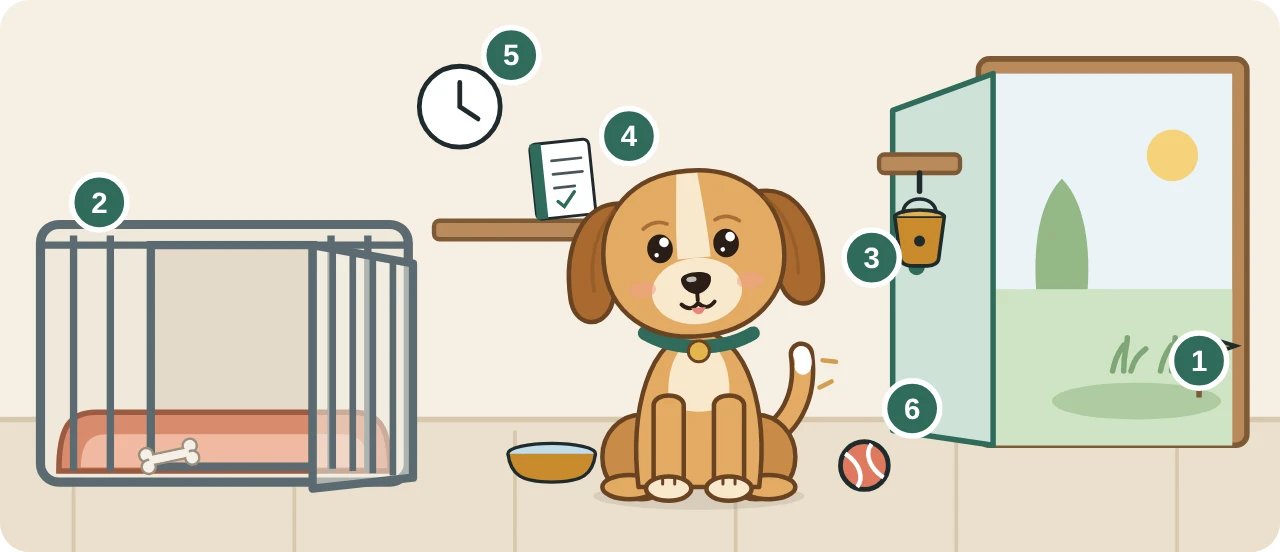

Keep the first week small and predictable. Focus on four things: a steady potty routine, lots of sleep, a safe space like a crate or pen, and short, happy introductions to the world. Book a vet visit for the first days. Almost everything else can wait.
- Day 1Arrive, potty spot, lots of sleep
- Days 2 and 3Build the rhythm: out, eat, play, nap
- Days 4 and 5First vet visit
- Days 6 and 7Gentle new sights and sounds
Before day one
Have the basics ready so the first day is about your puppy, not a shopping trip. Our new puppy checklist has the full list; the short version is a crate or pen, a washable bed, the food your puppy already eats, bowls, a harness or collar with an ID tag, a lead, a few safe chews, and an enzyme cleaner.
Puppy-proof one room: cables, medicines, cleaning products, toxic plants and small swallowable things out of reach.[1]
Day 1: arrive and decompress
Go straight to the potty spot when you get home and wait quietly. Then let your puppy explore one room, not the whole house. Keep visitors away for now. Sleep is the most useful thing your puppy can do today.
Days 2 and 3: build the rhythm
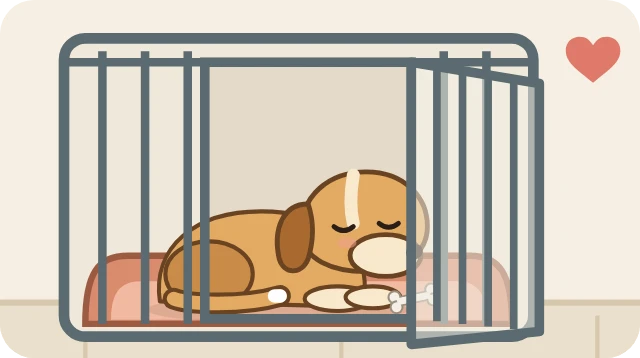
Start the routine you'll keep: out, eat, out, play, out, nap. Take your puppy out after meals, after naps and every couple of hours in between.[2] Plan naps in the crate or pen as part of the schedule. If nipping starts, see how to stop puppy biting.
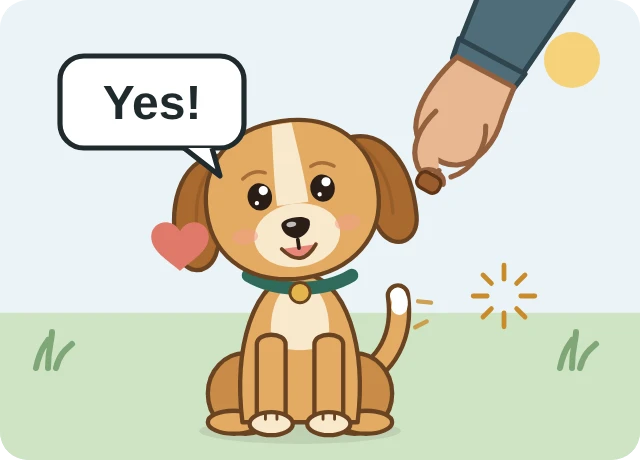
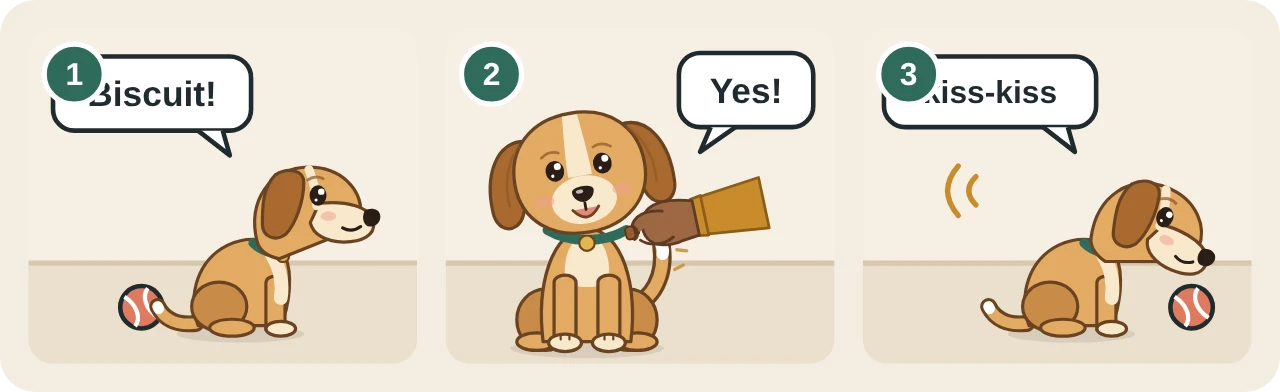
Begin two tiny games: say your puppy's name and reward a look, and reward them for coming to you. A few repetitions a few times a day is plenty.
Days 4 and 5: the first vet visit
Bring any paperwork from the breeder or shelter. Ask about vaccinations, parasite control, when it is safe to meet other dogs and go to puppy classes, and anything you've noticed about eating, sleeping or toileting. Bring treats so the vet's table becomes a nice place.
Days 6 and 7: gentle introductions
Socialising means calm, positive experiences at your puppy's pace, not meeting everything at once. Try new floor surfaces, the vacuum from another room, a short car ride, being held, and having paws touched. Pair each new thing with a treat, and let your puppy choose to approach.
Timing matters. The American Veterinary Society of Animal Behavior describes the first three months as the main socialisation window, and says puppies can start classes from 7 to 8 weeks if they have had a first set of vaccines and deworming at least 7 days before the first class.[3] Ask your vet how this applies to your puppy and your area.
What can wait
Long walks, dog parks, lots of visitors and formal training can wait a little. The first week is about trust and routine. Our free First-Week Puppy Plan turns this into a day-by-day workbook with a potty log and three starter games.
Questions people ask
When should a new puppy see the vet?
Book a visit for the first week. Bring the breeder or shelter paperwork and ask about vaccinations, parasite control and when it is safe to meet other dogs.
Can my puppy go to classes before all its vaccines?
The American Veterinary Society of Animal Behavior says puppies can start classes from 7 to 8 weeks if they had a first set of vaccines and deworming at least 7 days before the first class. Ask your vet how this applies to you.
Sources
- New Puppy Checklist: Gear You’ll Need for Your New Dog, American Kennel Club
- How to Potty Train a Puppy or Dog, Best Friends Animal Society
- Position Statement on Puppy Socialization, American Veterinary Society of Animal Behavior