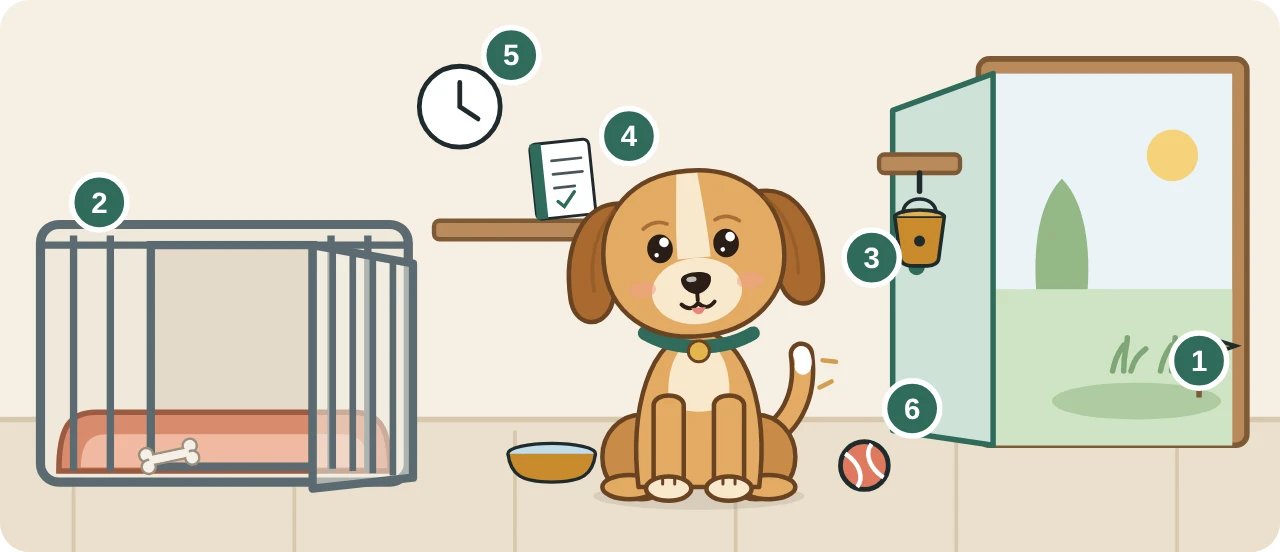
You need less than the shopping lists suggest. For day one: a crate or pen, a washable bed, the food your puppy already eats, two bowls, a harness or collar with an ID tag, a lead, a few safe chews and toys, poop bags, and an enzyme cleaner. Add a vet appointment for the first week and one puppy-proofed room. Everything else can wait until you know your puppy.
The day one essentials
Sleep and safe space
- A crate with a divider, or a puppy pen. A divider lets the crate grow with your puppy.[1]
- A washable bed or old towels. Some puppies shred beds, so start cheap.
- A baby gate if you want to close off rooms.[1]
Food and water
- The food your breeder or shelter has been using, so you don't change the diet on day one. Ask your vet before switching.
- Two bowls, easy to clean.
- Small, soft training treats.[1]
Walking and ID
- A comfortable harness or a flat collar. Skip prong and shock collars: the American Veterinary Society of Animal Behavior lists them as a red flag in training.[2]
- An ID tag with your phone number. Ask your vet about microchipping too.
- A 4 to 6 foot lead. Skip retractable leads for training.[3]
Chewing and play
- Two or three chews or teething toys of different textures.[1]
- A tug toy, which is handy for redirecting nipping.
Cleaning and toileting
- Poop bags.[1]
- An enzyme cleaner for accidents. Ordinary cleaners can leave a smell your puppy still notices.[4]
Puppy-proof one room
Before your puppy arrives, move medicines, cleaning products, electrical cords, toxic plants and small swallowable things out of reach.[1] One safe room is easier than a whole safe house.
What can wait
- Lots of toys. Rotate a few instead; they stay interesting longer.
- Grooming kit. A brush and nail clippers can come later, but start gentle handling of paws and ears in week one.
- Fancy beds and gadgets. Wait until you know whether your puppy is a chewer.
- A pet camera. Only useful once you start practising time alone. See do you need a pet camera.
Not things you buy
- A vet visit booked for the first week.
- A simple daily routine. Our first week plan walks through it.
- A potty spot outside, chosen before you get home.
A note on subscription boxes
Toy and treat subscription boxes can be a fun way to keep toys fresh once you know what your puppy likes. They are not essential, and if your puppy has food sensitivities, check treats with your vet. We list one option below; we haven't tested it, and the description comes from the vendor.
Sources
- New Puppy Checklist: Gear You’ll Need for Your New Dog, American Kennel Club
- Green and Red Flags for Choosing a Dog Trainer, American Veterinary Society of Animal Behavior
- Teach your dog to walk on a loose leash, Animal Humane Society
- How to Potty Train a Puppy or Dog, Best Friends Animal Society