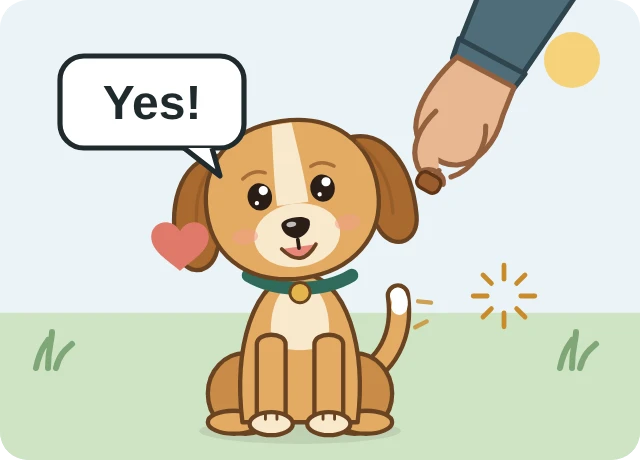
To potty train a puppy, take them to the same spot outside very often, reward them the moment they finish, and prevent accidents indoors by supervising or confining them when you can't watch. Animal welfare groups agree on the basics: frequent trips, an immediate reward, no punishment, and an enzyme cleaner for accidents.[1][2]
Step 1: pick one potty spot
Choose a spot close to the door. Walk your puppy there on a lead each time, so the trip is quick and predictable. A calm cue word said while they go, like "be quick", can later help you ask for a potty break before bed or a car ride.[1]
Step 2: go out far more often than you think
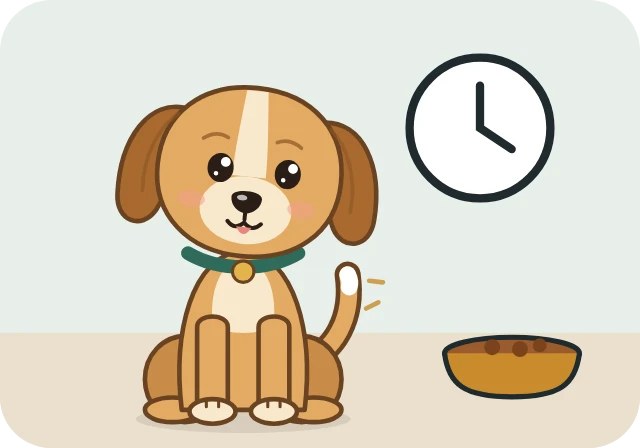
Young puppies can't hold it for long. Best Friends Animal Society advises trips after meals, after naps and every couple of hours in between.[1] Animal Humane Society goes further while you are actively training: take your dog out on lead about once an hour and wait 5 to 10 minutes.[2]
Good moments to go out:
- first thing in the morning
- after every nap
- after meals and big drinks
- during and after play
- when you see sniffing, circling or wandering off
- last thing at night
For a schedule by age, see how long a puppy can hold its pee.
Step 3: reward right away, outside
Give a small treat and praise the moment your puppy finishes, while you are still outside. If the treat comes after you are back indoors, your puppy may learn that coming inside is the good part.[2] Keep these trips boring otherwise: no play until after they have gone.
Step 4: prevent accidents indoors
Accidents teach your puppy that indoors works too, so prevention matters more than correction.
- Supervise closely during the first couple of weeks.[1]
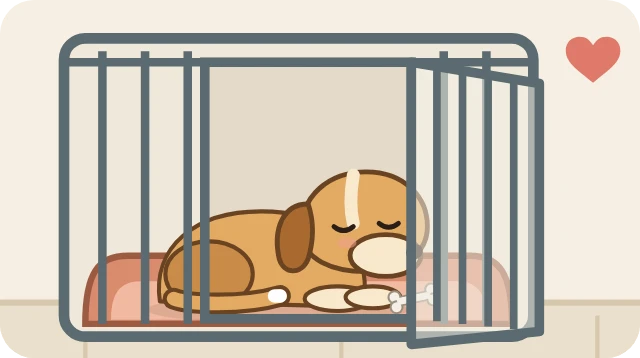
- When you can't watch, use a crate or a small puppy-safe room with a gate.[1]
- A common rule for crate time is your puppy's age in months plus one, in hours.[3] Treat it as an upper limit, not a target.
Read more in our guide to crate training at night.
Step 5: handle accidents calmly
- Caught in the act: interrupt calmly and take your puppy straight outside. Praise if they finish there.[1]
- Found later: just clean it up. Punishing, including yelling, tends to teach a puppy to hide when they need to go.[2]
- Clean with an enzyme cleaner. Ordinary cleaners can leave a smell your puppy still notices.[1]
Then shorten the gap between trips. Most accidents mean the schedule ran a little long.
How long does it take?
There is no honest single number. It depends on age, breed size, routine and how many accidents happen along the way. Expect weeks rather than days, with good days and setbacks. Keep a simple log of trips, wins and accidents; patterns show up fast, and our free puppy plan has a printable one.
When to call your vet
If a puppy who was doing well suddenly has lots of accidents, pees very often, strains, or seems uncomfortable, call your vet. Best Friends notes that new accidents in a house-trained dog can have a medical cause.[1]
If you learn better from video
Some people find it easier to watch training than to read about it. If that's you, a video program may help you stay consistent. We haven't tested it ourselves; the description comes from the vendor.
Questions people ask
How often should I take my puppy out?
After meals, after naps and every couple of hours in between, and about once an hour while you are actively training, per Best Friends Animal Society and Animal Humane Society.
Should I punish my puppy for accidents?
No. Punishing, including yelling, tends to teach a puppy to hide when they need to go. Clean up with an enzyme cleaner and shorten the next gap.
Sources
- How to Potty Train a Puppy or Dog, Best Friends Animal Society
- Housetraining: a survival guide, Animal Humane Society
- Crate training your dog or puppy, Animal Humane Society