A common rule of thumb is your puppy's age in months plus one, in hours, as the longest stretch.[1] So a 2-month-old puppy can manage up to about 3 hours at rest, but needs to go much sooner after eating, drinking, playing or waking up. Overnight, puppies can usually go a little longer because they are asleep. Plan breaks well before the limit, not at it.
The rule of thumb, and its limits
Animal Humane Society uses "age in months plus one" to set the maximum hours a young puppy should be crated.[1] Best Friends Animal Society puts it more simply: puppies can't hold their bladder and bowels for more than a few hours, so arrange a walk if you'll be gone longer than two or three.[2]
Here is what that rule works out to. These are our worked estimates from the rule, not measurements:
- 2 months (8 weeks): up to about 3 hours resting
- 3 months: up to about 4 hours
- 4 months: up to about 5 hours
- 6 months: up to about 7 hours
Every puppy is different. Excitement, play and a big drink all shorten the gap.
The moments that matter more than the clock
The clock gives you the longest gap. These moments tell you a break is due now:
- straight after waking up, including from naps
- soon after eating or a big drink
- during and after play
- sniffing the floor, circling or wandering off
- last thing before bed
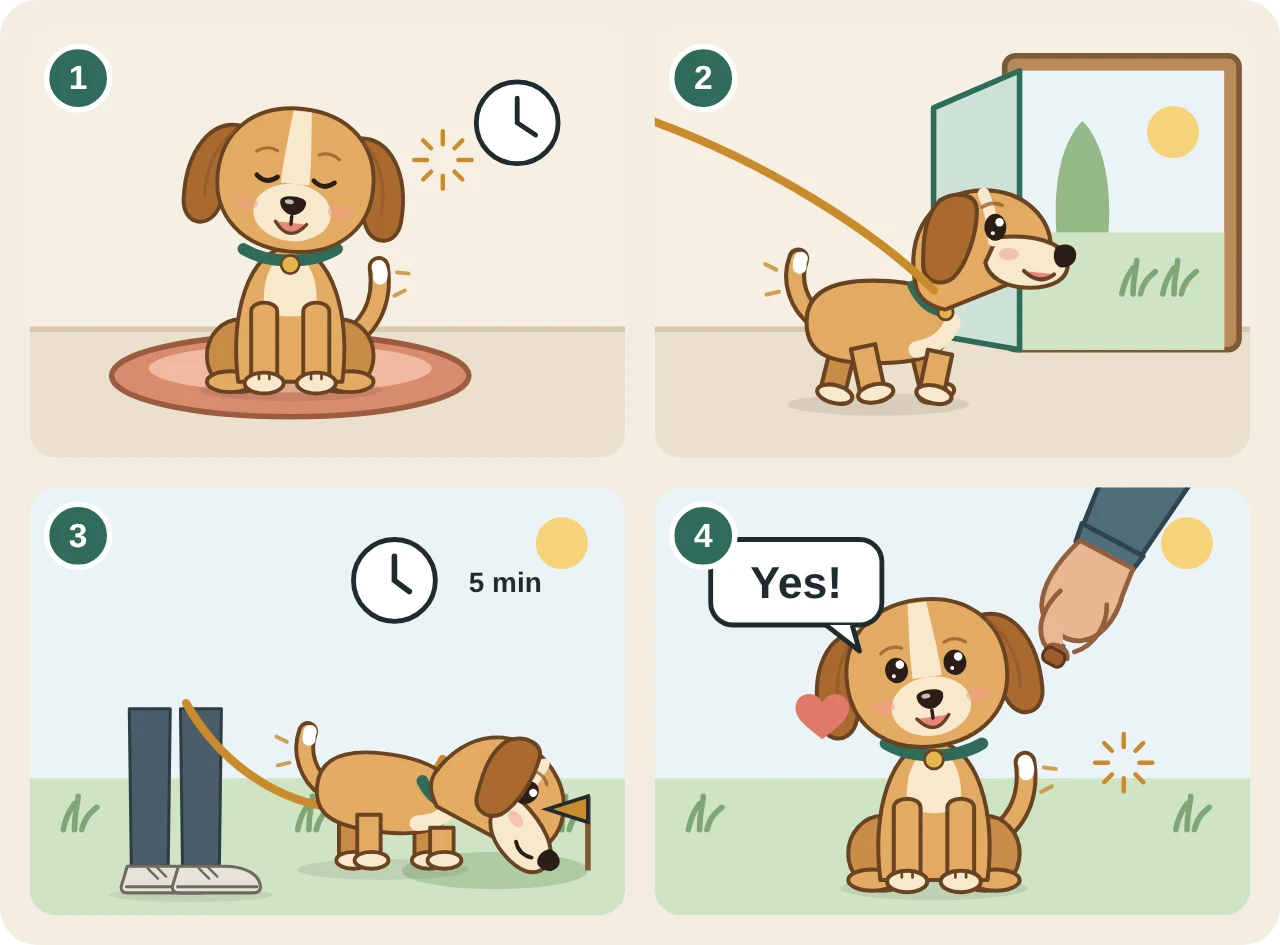
Overnight
Preventive Vet's trainer guidance is that very young puppies usually need at least two night breaks, while most puppies around 16 weeks can manage about 6 to 7 hours overnight.[3] Set an alarm so you take your puppy out before they wake up desperate, and keep the trip quiet: out, go, straight back to bed, no play.[3]
A sample day for an 8 to 10 week old puppy
- Wake up: straight outside
- Breakfast, then outside again
- Short play and a training game, then outside
- Nap in the crate or pen
- Wake up: outside
- Repeat eat, out, play, out, nap through the day
- Last trip just before bed
- One or two calm, boring trips overnight
Write it down for the first week. You'll soon know your puppy's timing better than any rule. Our free puppy plan includes a printable log.
When accidents happen
Accidents usually mean the gap was a little too long. Clean with an enzyme cleaner, don't scold, and shorten the next gap.[2] For the full method, see how to potty train a puppy.
When to call your vet
Call your vet if your puppy suddenly needs to go much more often, strains, cries when peeing, has blood in the urine, or seems to drink far more than usual. Accidents in a puppy who was doing well can have a medical cause.[2]
Questions people ask
How long can an 8 week old puppy hold its pee?
By the age-in-months-plus-one rule, up to about 3 hours at rest, but much less after eating, drinking, play or waking. Plan breaks well before the limit.
Does my puppy need to go out at night?
Usually yes at first. Preventive Vet says very young puppies typically need at least two night breaks, while most puppies around 16 weeks manage about 6 to 7 hours.
Sources
- Crate training your dog or puppy, Animal Humane Society
- How to Potty Train a Puppy or Dog, Best Friends Animal Society
- Crate Training Your Puppy at Night, Preventive Vet