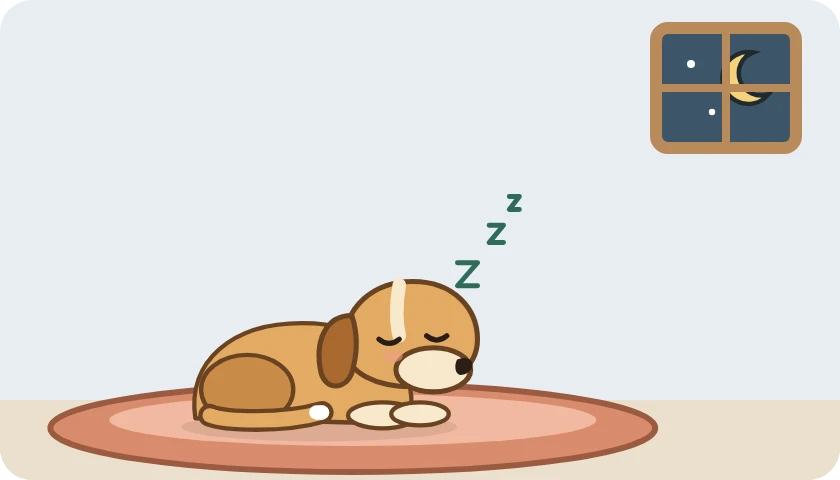
There is no single safe number, but the advice from animal welfare groups is cautious. The RSPCA advises leaving adult dogs for no longer than four hours, depending on the dog.[1] Puppies need much shorter gaps because of their bladders. More important than the number is building up to time alone slowly, starting with seconds, so your dog learns that being alone is safe and a bit boring.
What the guidance says
- Puppies: a common limit for crate time is age in months plus one, in hours.[2] See how long a puppy can hold its pee.
- Adult dogs: the RSPCA says no longer than four hours.[1] Animal Humane Society says it isn't a yes or no question: it depends on age, bladder control and your dog's physical and social needs.[3]
- Older dogs: often need more frequent breaks again.[3]
Our opinion: if your days are long, a dog walker, a neighbour or doggy daycare a few days a week makes a real difference. Animal Humane Society suggests the same options.[3]
Why being alone is a skill
Being alone isn't natural for a social animal; it's learned. Teaching it in tiny steps, before your dog has to cope with a full workday, is kinder and usually easier.
A step-by-step plan
Adapted from the RSPCA's "learning to be left alone" steps:[1]
- Reward calmA long-lasting chew on their bed, you in the room
- Add distanceMove away, come back, reward
- Leave the roomOut and straight back, then a little longer
- Defuse leaving cuesKeys and shoes, then sit back down
- Step outsideShort spells, a calm return
- Grow the timeSlowly, towards an hour
- Reward calm. Give a long-lasting chew while your dog settles on their bed with you in the room.
- Add distance. Ask your dog to stay on their bed while you move away, then come back and reward.
- Practise leaving the room. Go out and come straight back, then close the door briefly, then stay out a little longer. Vary the times.
- Take the drama out of leaving cues. Pick up keys or put on shoes, then sit back down.
- Step outside the front door for short spells, then return calmly. No big greetings.
- Grow the time slowly. If your dog gets upset, go back to the last easy step. The RSPCA notes that once a dog is comfortable for up to an hour, longer periods should be manageable.[1]
Make the time alone easier
- A walk or play session before you leave, and a meal, help your dog rest.[1]
- Food puzzles and treat toys give them something calm to do.[3]
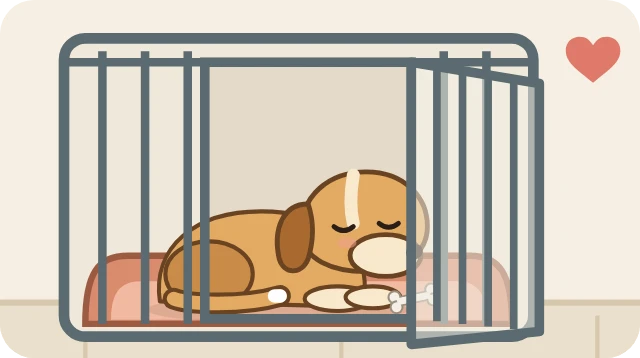
- A crate your dog likes, or a puppy-safe room, prevents accidents and chewing.[3]
- Some dogs settle better with the radio or TV on. Try it and see.[3]
Signs your dog is struggling
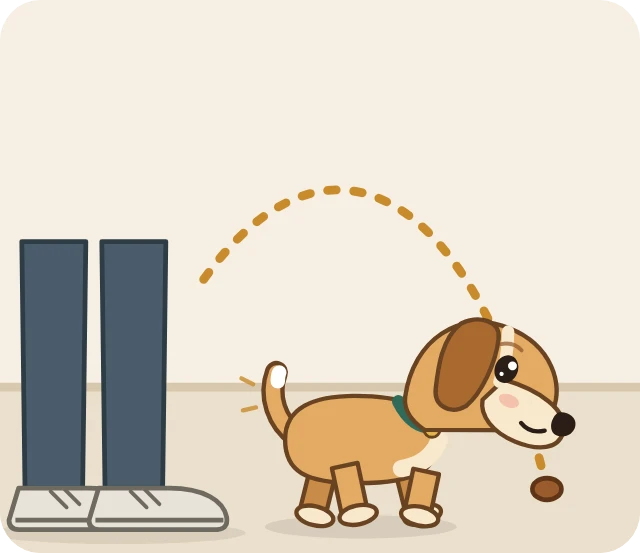
Watch for barking or howling, destruction around doors and windows, toileting indoors in a house-trained dog, pacing, trembling or whining.[1] Some signs are easy to miss, so the RSPCA suggests filming your dog while they're alone from time to time.[1] If you want an easy way to do that, see our guide to whether you need a pet camera.
If you see these signs, talk to your vet first to rule out other causes. They may refer you to a qualified behaviourist.[1] Behaviourists can look for the cause and help, and punishing a worried dog only adds to the worry.
Sources
- Learning to be left alone (leaflet), RSPCA
- Crate training your dog or puppy, Animal Humane Society
- Leaving your dog home alone (a guilt-free guide), Animal Humane Society