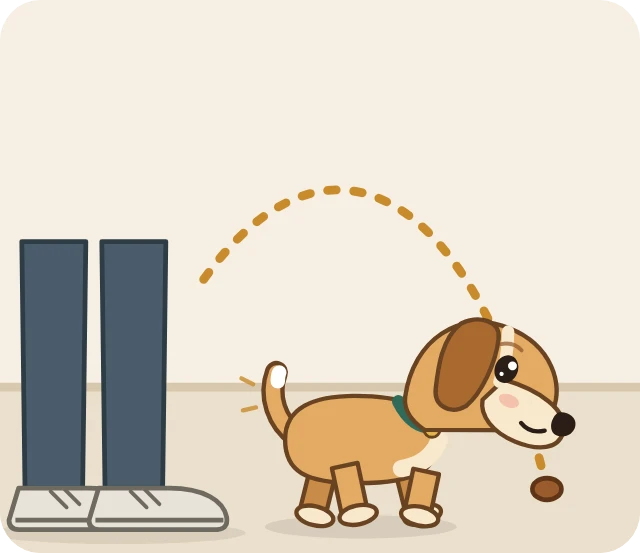
The best brain games for dogs are short, food-based and easy to set up: Find It, a muffin tin puzzle, a snuffle mat, and a hand target. Keep sessions to about 10 to 20 minutes, stop while your dog is still enjoying it, and use tiny treats or part of their daily food.[1] You don't need to buy anything to start.
Five games you can play today
1. Find It
Say "find it" and drop a piece of kibble by your feet. Once your dog gets the idea, toss it a little further, then hide pieces around one room. Toronto Humane Society's enrichment guide includes this kind of nose game, played on a lead for dogs who need to stay calm.[1]
2. Muffin tin puzzle
Put kibble in some cups of a muffin tin and cover every cup with a tennis ball. Your dog has to move the balls to find the food.[1]
3. Snuffle mat or towel roll
Scatter kibble into a snuffle mat, or across a towel that you then roll up loosely. Sniffing it out is slower, calmer eating.[1]
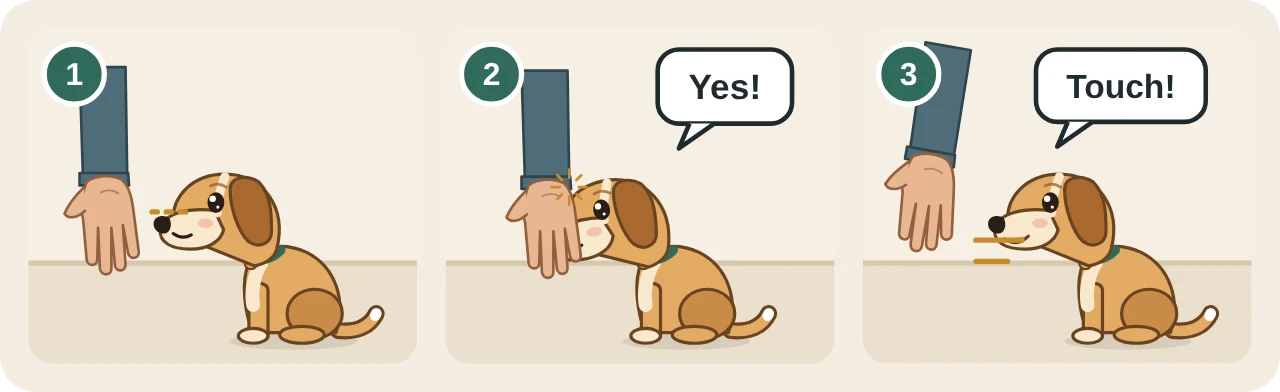
4. Touch (hand target)
Hold your flat hand near your dog's nose. When they bump it, say "yes" and treat. Move your hand a little further each time. It's a handy way to move your dog without pulling them.[1]
5. The cardboard box
Hide kibble in a box of crumpled paper and let your dog dig. Pick up the shredded paper afterwards.[1]
How to keep games fun
- Short sessions. About 10 to 20 minutes, and end while your dog still wants more.[1]
- Tiny rewards. Treats shouldn't become a big part of the diet; use some of your dog's daily food instead.[1]
- Make it easier if they struggle. If your dog shows stress, like a lowered head, ears back or trembling, go back to an easier step.[1]
- Check with your vet first if your dog has exercise restrictions or a medical condition.[1]
Why games are training in disguise
Reward-based games teach skills your dog uses every day: Find It builds focus on the ground in front of you, Touch gives you a way to move your dog, and every game rewards checking in with you. The American Veterinary Society of Animal Behavior recommends reward-based methods for all dog training.[2] We don't make claims about intelligence or "brain power"; we just think short games are a kind, practical way to train.
Rainy day plan
Rotate two games a day rather than doing all five. A Find It round before breakfast and a muffin tin at dinner is plenty for most puppies. Our free puppy plan includes three starter games with step-by-step pictures.
Want more games in a set order?
If your dog loves these and you'd like a structured sequence, a games-based course is one next step. We haven't tested it ourselves; the description comes from the vendor. You never need a paid course to keep playing.
Sources
- Brain Games: Enrichment Games for Dogs, Toronto Humane Society
- Position Statement on Humane Dog Training (2021), American Veterinary Society of Animal Behavior