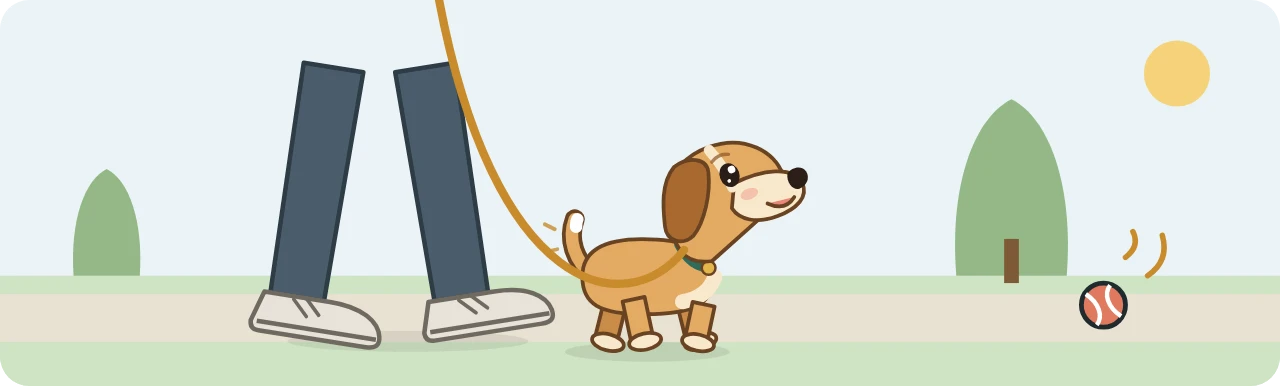
Start leash training indoors, before the first real walk. Let your puppy get used to a harness and a light lead, teach a marker word like "yes", then reward them for staying near you and checking in. Practise in the house and garden first, then take the same game outside with better treats. When your puppy pulls, stop, get their attention back, and only move on when the lead is loose.[1][2]
The gear
- A comfortable harness or flat collar. The AKC article prefers a harness for puppies and a front-clip harness for large puppies.[1]
- A 4 to 6 foot lead. Both sources advise against retractable leads.[1][2] Our reading of why: a pulling puppy gets more line, so pulling pays.
- Small, soft treats in a pocket or pouch.[2]
Step 1: get used to the gear
Put the harness on for a few seconds at a time, with treats, then let your puppy wander around the house with the lead attached while you watch. Take it off before they start chewing it.
Step 2: teach a marker
In a quiet room, say "yes" (or click) and give a treat straight after. Repeat until your puppy looks up expectantly when they hear it.[1] Now "yes" means "that, exactly that, and a treat is coming".
Step 3: reward check-ins
With the lead on, say "yes" and reward whenever your puppy looks at you or comes close. If they reach the end of the lead, say their name, mark the look back, and reward when they return.[1]
Step 4: walk a few steps together
Hold treats on the side you want your puppy to walk. Take one step, stop, and feed a treat beside your leg. Then two steps, then three. Talk to your puppy as you go. Once this is easy, give it a name like "with me".[2]
Step 5: take it outside
Outside is far more exciting, so make it easier: a quiet street, better treats, shorter sessions.[1] Check with your vet about when it is safe to walk where other dogs go.
When your puppy pulls
- Stop. Don't follow the pull.
- Call your puppy back or lure them to your side.
- Take two or three steps with a loose lead, then reward. This teaches that walking beside you pays, not pulling.[2]
If they fixate on a dog or person, say their name and move away from the distraction.[2]
Sniff walks count too
Not every walk needs to be training. The AKC article suggests regular sniffy walks where your puppy chooses the direction, which meets their need to explore.[1] You can use a different cue, like "go sniff", so your puppy knows which kind of walk it is.[2]
If you want more structure
If you enjoy short training games and want them in a set order, a structured course can help you stay consistent. We haven't tested this one ourselves; the description comes from the vendor.
If your dog lunges, growls or seems frightened on walks, that's not a leash skill problem to train through alone. Talk to your vet and a qualified behaviour professional.
Questions people ask
When should I start leash training my puppy?
You can start indoors as soon as your puppy settles in, with a harness and light lead. Ask your vet when it is safe to walk where other dogs go.
Sources
- How to Teach a Puppy to Walk on a Leash, American Kennel Club
- Teach your dog to walk on a loose leash, Animal Humane Society