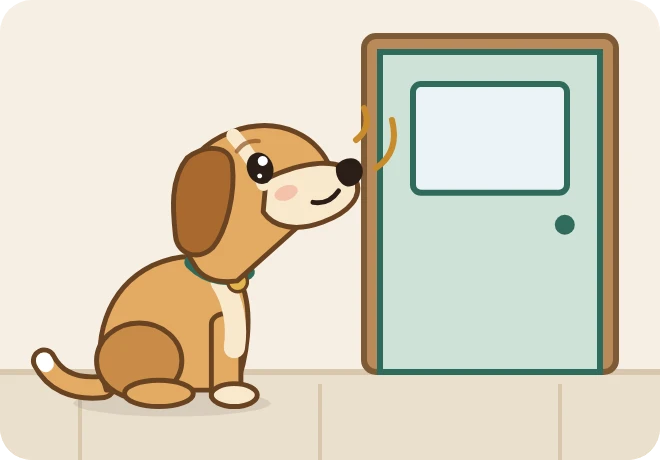
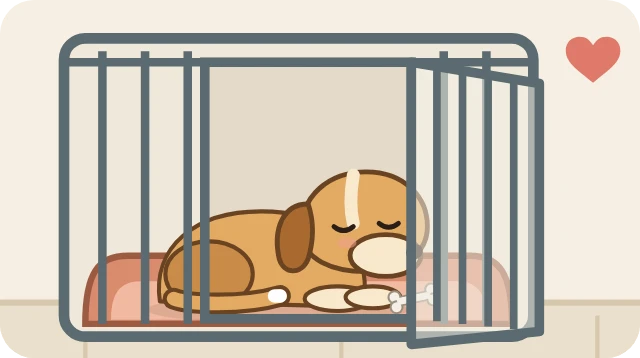
For the first nights, put the crate in or next to your bedroom. Your puppy can hear and smell you, and you'll know when they really need to go out. Give a last potty trip just before bed, keep any night trips quiet and boring, and settle crying calmly rather than letting your puppy out every time they cry.[1][2]
Why the first nights are hard
Your puppy has just left their mother and littermates. Night is often the first time they are truly alone in a strange place, so some crying is normal. The goal isn't silence at any cost. It's helping them feel safe enough to sleep.
Where to put the crate
Animal Humane Society recommends keeping the crate in or near your bedroom, so your puppy doesn't link it with being shut away, and so they can tell you when they need to go out.[1] If your puppy is kept awake by noise or movement, Preventive Vet suggests a quieter corner, or a fan or sound machine to mask household noise.[2]
Once nights are calm, you can move the crate gradually to where you want it long term.
- Next to your bedThe first nights
- By the bedroom doorOnce nights are calm
- Its long-term spotWhen the door step is easy
Setting up the crate
- Size: big enough to stand up and turn around, but not so big there is room for a separate bathroom corner. Many crates come with a divider so they can grow with your puppy.[1]
- Bedding: something soft that is safe if chewed. Watch for shredding.
- Comfort: a cover over part of the crate can make it feel more like a den. Leave the front open for air.

A calm bedtime routine
- Last meal three to four hours before bed, so there is time to go out afterwards.[2]
- A gentle wind down: a chew or a sniffy walk, not wild play.[2]
- Last trip outside just before bed.
- Into the crate with a chew they love, lights low.
Night potty trips
Set an alarm so you take your puppy out before they wake up needing to go.[2] Keep a lead and a torch by the door. Out on the lead, let them go, praise quietly, then straight back to the crate. If nothing happens within about five minutes, go back to bed.[2] As your puppy grows, stretch the time between trips.
When your puppy cries
First ask: could they need to go out? If it has been a while, take them out calmly.
If they have just been out, sit nearby and speak softly. Animal Humane Society advises not yelling, banging on the crate, or opening the door for every protest, since attention and release teach crying to work.[1] Preventive Vet makes a useful distinction: frantic, nonstop crying with escape attempts is distress and needs calm comfort; repetitive barking while watching you is often a request, and quiet is what you reward.[2]
Make the crate a good place in the daytime
Nights get easier when the crate already means good things. Feed meals in the crate, drop treats in for your puppy to find, and let them nap there with the door open. Never use the crate as a punishment.[1]
If crying turns into panic, like drooling, frantic scratching, or hurting themselves trying to get out, stop and talk to your vet or a qualified reward-based trainer. That's distress, not normal settling.
Questions people ask
Should I ignore my puppy crying in the crate at night?
First check whether they need to go out. If not, settle them calmly without opening the door for every protest. Frantic crying with escape attempts is distress and needs calm comfort and, if it continues, advice from your vet.
Where should the crate go at night?
In or near your bedroom at first, so your puppy feels secure and you can hear when they need to go out. You can move it gradually later.
Sources
- Crate training your dog or puppy, Animal Humane Society
- Crate Training Your Puppy at Night, Preventive Vet